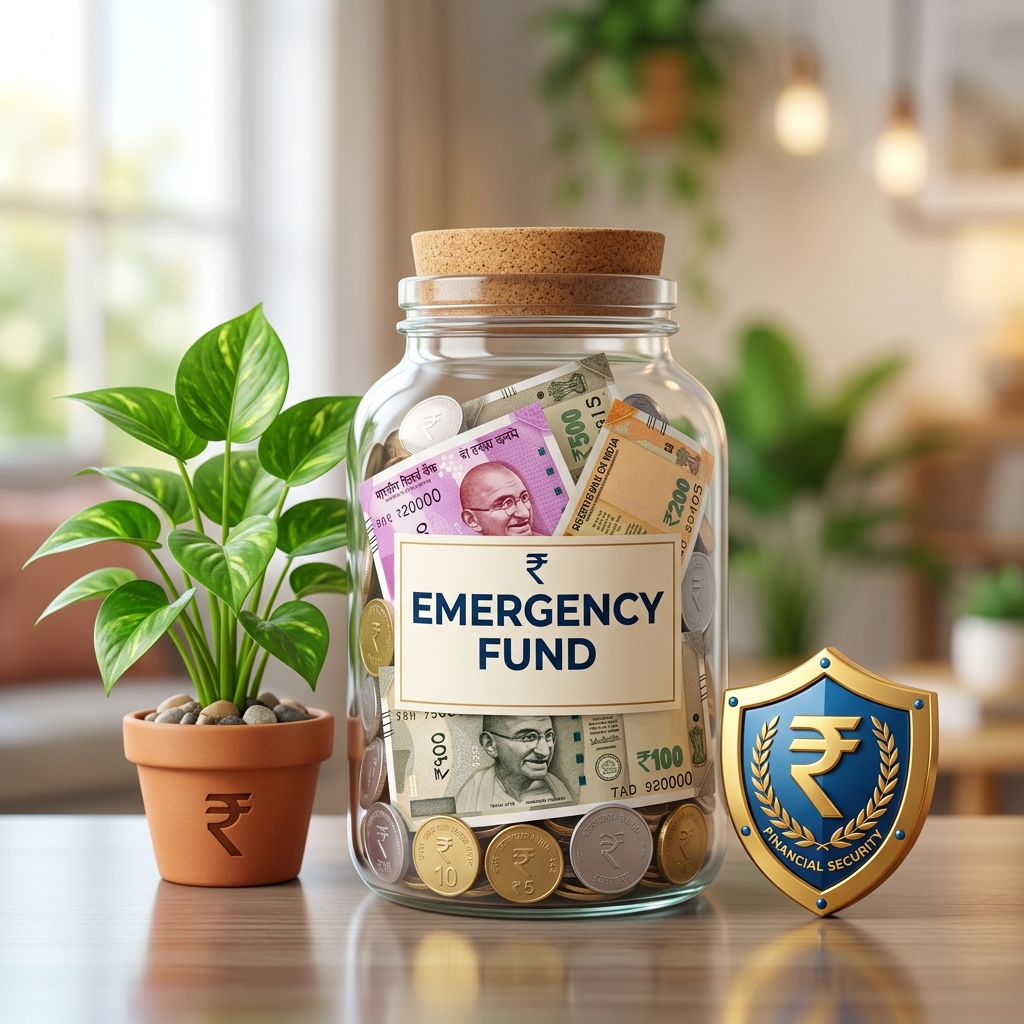
How to Build an Emergency Fund in India: The Ultimate Step-by-Step Guide
An emergency fund is your financial seatbelt. Learn why you need one, how much you should save, and the best places to park your emergency cash in India — even on a tight salary.
Quick Summary
Key Takeaways: An emergency fund is a pool of money set aside specifically for unexpected expenses like job loss, medical emergencies, or urgent house repairs. Aim for 3-6 months of essential expenses (not income). For most Indians, this is ₹1.5 lakh to ₹4 lakh.
Many Indians jump straight into the stock market or buy real estate without a safety net. This is a recipe for disaster. If a crisis hits, you might be forced to sell your long-term investments at a loss or take high-interest personal loans.
An Emergency Fund (also called a Contingency Fund) ensures that a life crisis doesn't become a financial crisis. It is your financial shock absorber.
1. How Much Do You Really Need?#
The standard rule is 3 to 6 months of your monthly expenses. However, in the post-pandemic world, 6 to 9 months is often safer for single-income households.
Note: This is expenses, NOT income. Calculate only what you MUST pay each month:
| Expense Category | Monthly Amount (Example) |
|---|---|
| Rent / Home Loan EMI | ₹15,000 |
| Groceries and household | ₹8,000 |
| Utilities (electricity, internet, water) | ₹3,000 |
| Transport | ₹4,000 |
| Insurance premiums (monthly equivalent) | ₹2,000 |
| School fees (if applicable) | ₹5,000 |
| Total Essential Monthly Expenses | ₹37,000 |
| 3-month emergency fund target | ₹1,11,000 |
| 6-month emergency fund target | ₹2,22,000 |
Who Needs More?
- 6-9 months: Self-employed, freelancers, single-income households, those with health conditions.
- 3 months: Salaried employees with stable jobs, dual-income households, government employees.
2. Where Should You Keep the Money?#
An emergency fund has two priorities: Safety and Liquidity. High returns are NOT the priority here.
| Where to Keep | Pros | Cons | Recommended? |
|---|---|---|---|
| Regular Savings A/c | Instant access | Low interest (3-4%), temptation to spend | Only for 1st month buffer |
| High-yield Savings A/c | 4-7% interest, easy access | Slightly less liquid | ✅ Yes |
| Liquid Mutual Fund | 6-7% returns, T+1 withdrawal | Minor market risk | ✅ Yes (bulk of fund) |
| Sweep-in FD | FD interest, instant liquidity | Penalty if broken too early | ✅ Yes |
| Stocks / Equity MF | High returns potential | Can be down 30% when you need it | ❌ Never |
The 30/70 Strategy: Keep 30% in a separate savings account for instant access via ATM/UPI. Keep the remaining 70% in a Liquid Mutual Fund or a Sweep-in FD for better returns with high safety.
Avoid: Never put your emergency fund in the stock market, crypto, or long-term FDs with heavy premature withdrawal penalties. You cannot wait for the market to recover when you have a medical emergency.
3. How to Build It (Step-by-Step)#
If you have NO savings right now, follow this aggressive plan:
- The 'Mini' Fund: Aim for ₹50,000 first. This covers most small emergencies (phone repair, minor car issues).
- Stop Discretionary Spending: Pause all non-essential investments (like extra SIPs) until the mini-fund is ready.
- Automate: Set an auto-transfer to your emergency account on your salary day.
- Use Windfalls: Put your tax refunds, annual bonuses, or any unexpected gifts directly into this fund.
- Reduce Lifestyle Creep: Before upgrading your lifestyle after a raise, finish your emergency fund first.
4. When to Use It?#
You must define what an "Emergency" is.
- Yes: Job loss, medical bill not covered by insurance, urgent car/house repair, sudden travel for a family crisis.
- No: A "Once-in-a-lifetime" sale on Amazon, a friend's wedding, a vacation, or a "good investment opportunity".
Rule of Thumb: If you've used money from the fund, your #1 priority should be to refill it before starting any other investments.
Frequently Asked Questions#
1. Should I finish my emergency fund before investing in SIPs? Ideally, build a 'Mini' fund of 1-2 months' expenses first. Then, you can split your savings — 80% to build the full emergency fund and 20% to start your SIPs to build the habit.
2. My company provides insurance, do I still need a medical emergency fund? Yes. Insurance often requires you to pay upfront (reimbursement) or has "non-medical" expenses (consumables) that you must pay out of pocket.
3. Is a Credit Card an Emergency Fund? No. A credit card is debt. If you lose your job, you won't be able to pay the bill, and the 40% interest rate will destroy you. A credit card can buy you 30 days of time, but it is not a substitute for cash.
4. Should both spouses have separate emergency funds? One shared emergency fund for the household is sufficient. The key is that both spouses know where it is and how to access it.
5. An emergency fund earning 6% feels like "wasted money" compared to 15% in stocks. Is it? This thinking is wrong. The emergency fund's job is NOT to grow — it's to protect your other investments. Without it, you'll be forced to sell your stocks during a market crash to pay for an emergency.
Related Articles
Personal Budget Kaise Banayein — 50/30/20 Rule Complete Guide in Hindi
Learn how to create a monthly personal budget using the popular 50/30/20 rule — allocate 50% to needs, 30% to wants, and 20% to savings. Includes real examples for Indian salaried employees.
Credit Card Mastery Guide India 2026: Maximize Rewards and Avoid the Debt Trap
Credit cards are powerful financial tools if used correctly. Learn how to maximize reward points, choose the right card for your spending, improve your CIBIL score, and never pay a rupee in interest.