Credit Card Mastery Guide India 2026: Maximize Rewards and Avoid the Debt Trap
Credit cards are powerful financial tools if used correctly. Learn how to maximize reward points, choose the right card for your spending, improve your CIBIL score, and never pay a rupee in interest.
Quick Summary
The Golden Rule of Credit Cards: Always pay your full bill on time. If you do this consistently, a credit card is essentially a free 45-day loan that pays you back in rewards, cashback, and points. If you don't, it becomes a high-interest debt trap at 36-48% annual interest.
In India, credit card usage has exploded — from 5 crore cards in 2018 to over 10 crore cards in 2024. Yet, millions of users are paying unnecessary interest, missing out on thousands of rupees in rewards, or damaging their CIBIL score without realizing it.
This complete guide will teach you how to use credit cards like a financial expert — maximizing every rupee while avoiding every trap.
Why Credit Cards Are Powerful (If Used Right)#
A well-used credit card offers benefits that debit cards and cash simply cannot:
- 45-day interest-free credit period — spend today, pay 45 days later (no interest if paid in full)
- Reward points worth 1-5% of your spending — essentially free money
- Purchase protection — dispute fraudulent transactions easily
- CIBIL score building — best way to build a strong credit history
- Travel perks — airport lounge access, air miles, hotel discounts
- Zero-cost EMI on electronics, appliances (effectively 0% financing)
Section 1: Choosing the Right Credit Card#
Not all cards are equal. The best card depends on your biggest spending category. Choosing wrong means leaving thousands of rupees in rewards on the table.
| Spending Category | Best Card | Key Benefit |
|---|---|---|
| Online Shopping | Amazon Pay ICICI Card | 5% cashback on Amazon, 2% elsewhere (LTF) |
| Flipkart Shopping | Flipkart Axis Bank Card | 5% cashback on Flipkart, 4% on Myntra |
| Travel (Domestic) | HDFC Regalia / SBI SimplyCLICK | Reward points + lounge access |
| Travel (Premium) | HDFC Diners Club Black | Air miles, international lounge, 10X rewards |
| Fuel | BPCL SBI Card | 4.25% value back on fuel |
| Dining | Swiggy HDFC / Zomato RBL | 10% cashback on food orders |
| Utility Bills | Airtel Axis Bank Card | 25% cashback on Airtel, 10% on other utilities |
| All-round/General | Axis Magnus / HDFC Millennia | Balanced rewards across all categories |
Key Tips When Choosing a Card:
- Lifetime Free (LTF): Prefer LTF cards — no annual fee means you always profit
- Joining Bonus: Many cards offer ₹500-2,000 joining rewards — factor this in
- Annual Fee Waiver: Many cards waive the fee if you spend above a threshold (e.g., ₹1 lakh/year)
- Reward Redemption: Check if points are redeemable for cash, vouchers, or only for specific products
Pro Tip: Use apps like CRED or Cheq to manage multiple card bills in one place and earn minor additional rewards on bill payments. However, never let these apps push you to spend beyond your budget.
Section 2: Understanding the Credit Card Bill#
Most people don't understand their statement. Here's what matters:
The Statement Cycle:
- Statement Date: The day your bill is generated (e.g., 15th of every month)
- Due Date: The day you must pay (usually 20-25 days after statement date)
- Credit-Free Period: From the start of your billing cycle to the due date — up to 45-50 days interest-free
What You MUST Pay:
- Total Amount Due: The full bill. Pay this to avoid any interest. This is what you should always pay.
- Minimum Amount Due: A trap. Usually 5% of the bill. Paying this stops late fees but charges 3-4% monthly interest on the remainder = 36-48% annually.
Minimum Due Trap: If you owe ₹50,000 and pay only the minimum ₹2,500, the bank charges ~3.5% monthly interest on the remaining ₹47,500. That's ₹1,662.50 in interest — per month! Over a year, you'd pay ₹19,950 in interest alone on ₹50,000 debt.
Section 3: Maximizing Rewards and Cashback#
The average Indian with a good rewards card earns ₹3,000-8,000 per year in rewards just from routine spending. Here's how to maximize:
Strategy 1: Categorize Your Spending Route each spending category through the card that gives maximum rewards:
- Groceries → Card with best grocery rewards
- Fuel → Fuel-specific card (BPCL, HPCL, etc.)
- Online shopping → Amazon Pay ICICI or Flipkart Axis
- Travel → Miles-linked premium card
Strategy 2: Consolidate Big Purchases Use your credit card for large purchases (rent via apps, insurance premiums, school fees where applicable) to accumulate points faster. Pay the full amount on due date.
Strategy 3: Redeem Rewards Wisely
- Best redemption: Direct cashback or statement credit (100% value)
- Good redemption: Flight/hotel bookings through card portal (80-90% value)
- Avoid: Physical products from rewards catalog (often only 40-60% value)
Strategy 4: Welcome and Milestone Bonuses Many cards offer 2,000-5,000 points as welcome bonus. Some offer milestone bonuses when you spend ₹1 lakh, ₹2 lakh, etc. in a year. Plan large purchases to hit these milestones.
Section 4: Building Your CIBIL Score with Credit Cards#
A credit card is the easiest and most effective way to build a strong CIBIL score (targeted: 750+), which you'll need for home loans, car loans, and even rental agreements.
The 5 Factors of CIBIL Score:
| Factor | Weightage | How Credit Card Helps |
|---|---|---|
| Payment History | 35% | Pay full bill on time every month = perfect payment history |
| Credit Utilization | 30% | Keep usage below 30% of limit = healthy utilization |
| Credit Age | 15% | Keep your oldest card active = longer credit history |
| Credit Mix | 10% | Cards + loans = diversified credit profile |
| New Credit Inquiries | 10% | Don't apply for too many cards at once |
Ideal Credit Utilization: If your credit limit is ₹1,00,000:
- Spend below ₹30,000 per month = Excellent (below 30% utilization)
- ₹30,000-50,000 = Good (30-50% utilization)
- Above ₹75,000 = Bad for CIBIL (even if you pay in full)
Pro Tip: Request a credit limit increase every 6-12 months. A higher limit with the same spending = lower utilization = better score. Banks usually grant this if you have a good payment history.
Section 5: The 5 Things You Must NEVER Do#
1. Never Pay Only the Minimum Amount Due
As explained earlier, this triggers 36-48% annual interest. If you can't pay the full amount, pay as much as possible. Consider a personal loan at 12-18% to clear card debt — it's much cheaper.
2. Never Withdraw Cash from an ATM
Cash advance charges are brutal:
- 2.5-3.5% fee on the amount withdrawn (charged immediately)
- No grace period — interest starts from the moment cash leaves the ATM
- Interest rate: 3.5-4% per month (42-48% per year)
3. Never Use a Card You Can't Afford to Pay
This sounds obvious but many people swipe cards thinking "I'll figure it out later." Only use the card if you have the money in your bank account right now.
4. Never Miss a Payment Deadline (Even by 1 Day)
Late payment fee: ₹500-1,200 per instance. CIBIL score impact: -50 to -100 points. Set auto-pay for the minimum due as a safety net, then manually pay the full amount.
5. Never Apply for Multiple Cards Simultaneously
Each credit card application triggers a "hard inquiry" on your CIBIL — temporarily reducing your score. Space applications at least 6 months apart.
Section 6: Credit Card Security in India#
Credit card fraud is rising in India. Protect yourself:
Essential Security Settings (Do This Today):
- Disable international transactions (enable only when traveling abroad)
- Set transaction limit (e.g., ₹20,000/day) via bank app
- Enable transaction alerts for every spend (SMS + Email)
- Disable tap-to-pay (NFC) if you don't use it
- Virtual card number for online transactions (many banks offer this)
If Your Card is Compromised:
- Block the card immediately via bank app or customer care
- File a complaint with your bank within 3 days (RBI mandates zero liability for fraud reported within 3 days if negligence is not on your part)
- Lodge an FIR at your local cybercrime police station
Credit Card Security Checklist
- ✅ Virtual card number enabled for online transactions
- ✅ International transactions disabled (unless traveling)
- ✅ SMS alerts for every transaction (even ₹1)
- ✅ Auto-pay set for minimum due (as safety net)
- ✅ Statements checked monthly for unauthorized charges
- ✅ CVV not stored on shopping websites
Section 7: Getting Out of Credit Card Debt#
If you're already trapped in credit card debt, here is the action plan:
Step 1: Stop the bleeding — immediately stop using the card for new purchases.
Step 2: Calculate total debt — list all cards, outstanding amount, and interest rate.
Step 3: Choose your strategy:
- Balance Transfer: Transfer debt to a card offering 0% interest for 3-6 months (HDFC, ICICI offer this) — pay as much as possible during this window
- Personal Loan: Take a personal loan at 12-18% to pay off card debt at 42-48%. Massive interest saving.
- Debt Snowball: Pay off the smallest card balance first (builds momentum) while paying minimums on others.
Step 4: Create a repayment schedule — commit to clearing all card debt within 12-18 months.
Frequently Asked Questions#
1. Is it better to have many credit cards or just one?
Having 2-3 cards for different spending categories is ideal. It increases your total credit limit (lowering utilization), maximizes rewards, and provides backup. Beyond 4-5 cards, the complexity outweighs the benefits.
2. Does checking my own CIBIL score lower it?
No. Checking your own score is a "soft inquiry" — it has zero impact on your score. You can check it as many times as you want. Only bank "hard inquiries" (for loan/card applications) temporarily affect the score.
3. What should I do if I'm already in credit card debt?
- Stop using the card immediately
- Consider a balance transfer to a lower-interest card
- Take a personal loan at 12-15% to pay off the card debt at 40%+
- Talk to your bank about converting outstanding to a fixed EMI (lower interest rate)
4. Can I use a credit card for rent payments in India?
Yes, through apps like PayRent, NoBroker, or RedGiraffe. But note: most cards charge 1-2% processing fee on rent + GST, and many have stopped giving reward points on rent. Calculate whether the rewards earned exceed the processing fee.
5. How long does it take to build a good CIBIL score?
With responsible credit card use:
- From 0 (no credit history) to 700: About 12-18 months
- From 700 to 750+: Another 12-18 months of perfect payment history
- From 750 to 800+: 2-3 years of excellent credit management
6. What is the best credit card for beginners in India?
For first-time users, we recommend:
- SBI SimplySave Card (LTF if annual spend >₹1 lakh, good rewards for beginners)
- Amazon Pay ICICI Card (Lifetime Free, 5% cashback on Amazon, great for online shoppers)
- HDFC Millennia Card (Balanced rewards across all categories)
Start with one card, use it responsibly for 12 months, then consider adding a second card for a different spending category.
Related Articles
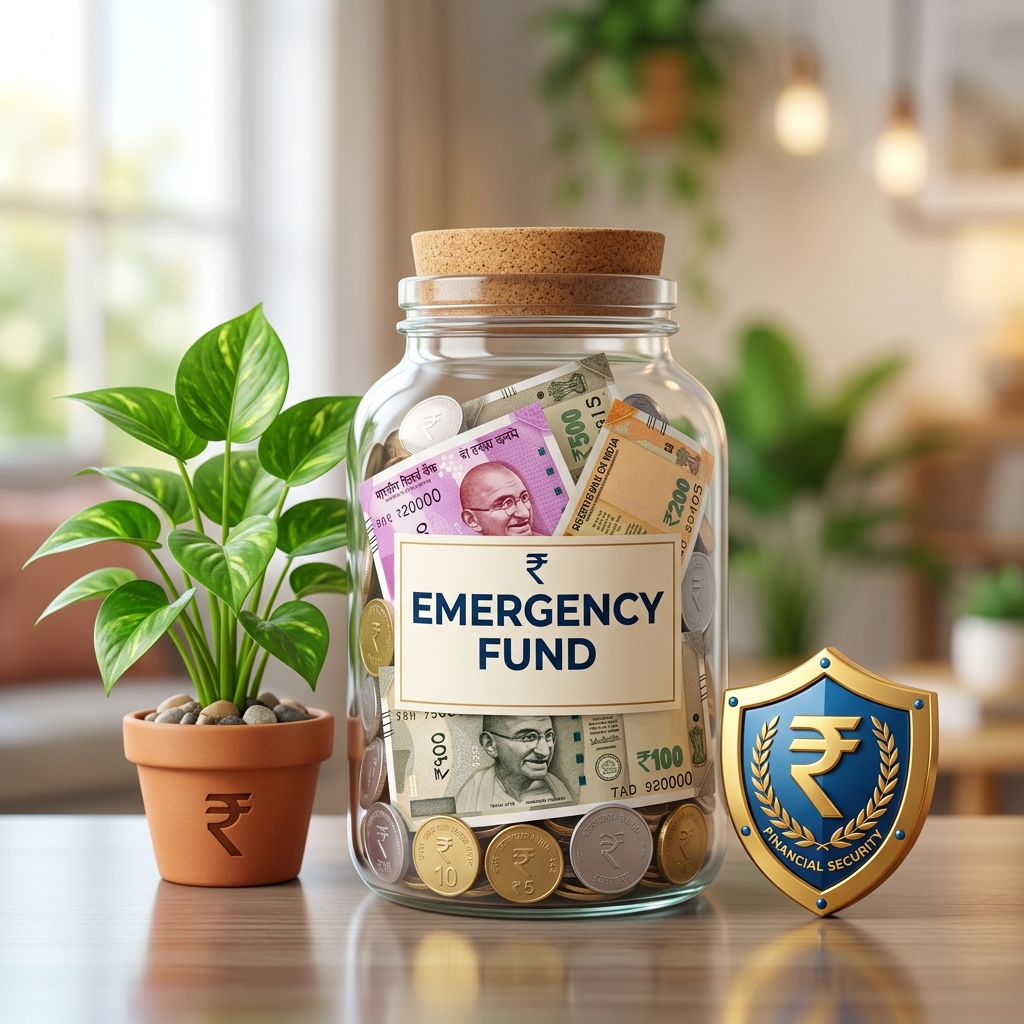
How to Build an Emergency Fund in India: The Ultimate Step-by-Step Guide
An emergency fund is your financial seatbelt. Learn why you need one, how much you should save, and the best places to park your emergency cash in India — even on a tight salary.
Personal Budget Kaise Banayein — 50/30/20 Rule Complete Guide in Hindi
Learn how to create a monthly personal budget using the popular 50/30/20 rule — allocate 50% to needs, 30% to wants, and 20% to savings. Includes real examples for Indian salaried employees.
How to Improve Your Credit Score — Actionable Step-by-Step Guide
A practical, step-by-step guide to improving your CIBIL credit score from poor to excellent. Understand what affects your score, what to do and avoid, and how long it takes.